- Aria's Browser History
- Posts
- What do psychedelics and startups have in common?
What do psychedelics and startups have in common?
Maybe you don't need substances to alter your state of consciousness

Aria Ma
November 14, 2025
Hello, my dear reader:
The first time I talked about psychedelics in a public setting was at a team meeting on campus. At the time, I didn’t understand there was a taboo. I’ve talked about it with my scientific advisors, community members, and strangers I met when asked what consuming my time.
This past summer, I attended a program in the Netherlands that introduced me to a different way of thinking of psychedelics. Something way different than what you might be familiar with, whether in the “underground,” academia, or this new movement towards medicalization of psychedelics. It revealed an energy that isn’t found here in the US.
I recently held a conference that brought together interdisciplinaries across psychedelic research because there were little public discussions about the topic. This is not a topic just meant for the well read or the well connected. Psychedelics are becoming a larger topic of interest in pop culture, and I’d like to take this newsletter to share with you how its use is intertwined with the idea of community, self-discovery, and building social impact ventures.
From my browser to yours, Aria
⏰ TL;DR
Indigenous communities understood that psychedelics work because of community, not in spite of it—and modern neuroscience confirms that strong social bonds literally enhance neuroplasticity and reduce inflammation. Building a startup mirrors this: the lone founder myth is as dangerous as the idea that healing happens in isolation. As VCs enter the psychedelic space, we need to remember that transformation—whether psychological, social, or entrepreneurial—requires collaboration, shared intention, and collective support to reach its full potential.
🔖 Bookmarks From Mine to Yours
Mental Health & Behavior Impact Accelerator, applications due December 8th
Want to learn how you can get involved in workplace climate action? Work on Climate has a series of roundtables and AMAs where you can find community with others interested in making their workplace more sustainable.
Are you interested in vibe coding but don’t know where to start? Launched by Lunch just curated an amazing website giving you a cheat sheet on all things vibe coding.
New beehiiv features that no other email monetization platform has, check out their release video here.
Are you working in ANY sector that’s selling ANYTHING, and you’re using social media in some form? Here are 150+ compiled static creatives to give you inspiration.
Are you a busy bee but still want your money to make money for you? Fidelity has a basic intro on how you can do just that.
Solo founder residency with one of the best groups on the planet in San Francisco, starts January 2026. Apply ASAP.
Need a non-dilutive microgrant to jumpstart your idea (yes, it doesn’t need to make ANY money)? Apply here for up to $1K.
What does the largest wealth disparity look like in Wyoming? This was a fun read to understand the billionaire class in a different perspective.
Build before you market. (Give this a quick skim, it’s a fun read).
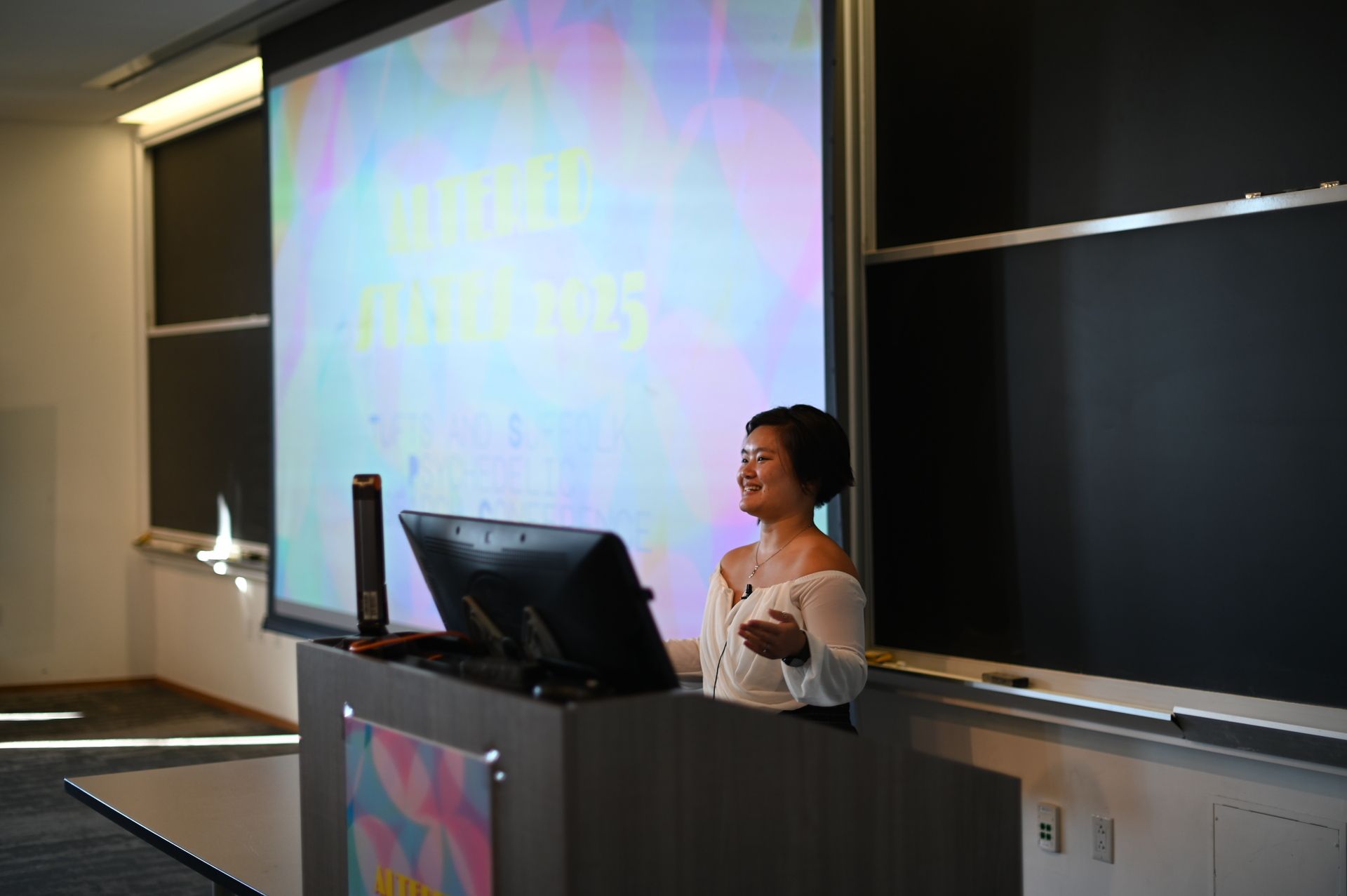
ALTEREDSTATES 2025: Tufts & Suffolk Psychedelic Research Conference
The Medicine Isn't Just the Molecule
What happens when you bring 80 people together to talk about psychedelic medicine?
I found out a few weeks ago.
After coming back from the Summer School on Psychedelic Research at the University of Groningen, I knew I had to recreate that energy stateside. So I hosted Boston's first interdisciplinary psychedelic research conference on November 1st—scientists, anthropologists, philosophers, activists, all in one room asking the same question:
How do we make this medicine accessible to the people who need it most?
But here's what struck me as I watched the conversations unfold:
The presentations were a vehicle for open dialogue amongst strangers to discuss this “controversial” topic.
Indigenous communities understood this thousands of years ago. Psychedelics weren't recreational. They weren't even purely medicinal in the way we think about medicine today. They were communal technologies—tools for deepening connection, processing collective trauma, and strengthening the social fabric that their communities together.
The psilocybin ceremony wasn't separate from the community feast. The ayahuasca ritual wasn't separate from the songs, the circle, the shared intention. The medicine worked because of the context it was held in.
And modern neuroscience is starting to catch up.
Research supports that strong social bonds increase endogenous DMT production in our brains. Yes, this is the same compound found in ayahuasca. Community literally changes our neurochemistry. It enhances neuroplasticity, reduces inflammation, and creates the conditions for deep psychological healing.
Building a company from scratch mirrors the psychedelic experience more than people realize.
Both require you to confront uncertainty. Both demand you sit with discomfort. Both force you to question assumptions about how things "should" work. And both are exponentially more powerful—and survivable—when you're held by community.
The lone genius founder myth is as dangerous as the idea that healing happens in isolation. Neither is true. Neither has ever been true.
Every successful company I've studied required collaboration across sectors. Product, science, operations, marketing, legal—none of these exist in silos. You need generalists who can synthesize. You need specialists who can go deep. You need people who fundamentally trust each other enough to share resources, take risks, and hold each other accountable when things get hard.
Sound familiar? That's exactly what Indigenous communities built around plant medicine.
They understood that transformation—whether psychological, social, or structural—doesn't happen alone. It happens in a container of shared intention, mutual support, and collective accountability.
And that's precisely what founders need but rarely create for themselves.
We're seeing the hype bleed into VC-backed psychedelic startups now, and my concern is this: if we approach these medicines—and entrepreneurship itself—through a purely extractive, individualistic lens, we'll replicate the same broken systems we're trying to fix.
But if we remember the Indigenous roots? If we build companies and movements with community at the center?
Then we unlock something much more powerful than exits and valuations.

📰 Random Recommendations
Powering down, Aria ✌️